What does it actually cost to live in the Philippines — and what nobody tells you before you go
The honest numbers across three budget levels, the hidden costs that surprise everyone, and why the expats who fail usually fail for the same reason.
By The Long Frequency · May 2026 · 12 min read
I want to start with something most cost of living articles skip entirely.
I know expats in the Philippines living on $1,200 a month. I know others spending $3,000 to $4,000 and considering it comfortable. Both groups are doing it correctly for their circumstances. The number that matters isn’t what someone else is spending, it’s whether your number includes a buffer for the thing nobody plans for.
More on that at the end. It’s the most important part of this article.
First: which Philippines are we talking about?
The Philippines is not one place financially any more than it is one place geographically. Where you choose to live determines your costs more than almost any other factor. The same lifestyle that costs $1,500 a month in Cebu costs $2,200 in Manila and something close to impossible to calculate in Singapore. This is the most expensive city in Asia and roughly 70-80% more expensive than Cebu by almost every metric.
This article covers the three places I have personal experience with: Cebu, Manila, and Singapore as regional reference points. I’ve spent time in all three primarily the Philippines. These aren’t numbers I researched from a spreadsheet. They are numbers I’ve seen with my own eyes and cross-referenced against current 2026 data.
Cebu: the entry point most people get right
The most honest current summary I’ve seen puts comfortable Cebu living at $1,500 to $1,800 a month for a single person. This covers a decent condo, daily Grab use, regular restaurant dining, gym, phone, and some healthcare. That tracks with what I’ve observed from people actually living there.
Here’s how that breaks down in 2026:
Housing: A one-bedroom apartment in Cebu averages around $336 per month. That’s the middle of the market. You can find something decent for $200-250 in less central neighborhoods, or pay $500-700 for a modern condo in IT Park or the Business District with a pool and gym included. Location matters enormously. Stay near Cebu IT Park or Cebu Business Park if you value reliable internet and walkability.
Food: This is where Cebu genuinely shines. Dining out starts at around $5 per meal at local restaurants. A karinderya eatery where food sits in pots behind a glass case and you point at what you want will feed you well for $1.50 to $2.50. Groceries from local markets are cheap. Imported goods and Western style supermarkets cost significantly more.
Transport: Grab is reliable and cheap. A typical city ride runs $1.50 to $3. Most expats don’t own vehicles. The combination of traffic, road conditions, and parking makes Grab a better value in the city. Not to mention avoiding accidents with other vehicles and motorcycles.
Utilities: This is the cost that surprises almost every new expat. The Philippines has some of the highest electricity costs in Southeast Asia. Running two air conditioning split units continuously generates monthly bills of $150 to $260. This is not optional in a tropical climate unless you’re comfortable living without AC, which most people from the US or Europe are not.
Healthcare: Pay as you go at private hospitals. A simple consultation runs about $20. ER visits start higher and can add up quickly with tests or overnight stays. Do not move here without health coverage. International insurance through providers like Cigna Global or Allianz runs $100 to $350 per month depending on age and coverage level. Local plans are cheaper but have more limited networks. Hospitals in the Philippines expect payment up front or approval letters from insurance before admitting for non life threatening conditions.
Visa: If you’re on a standard tourist visa you must extend it every one to two months. Over the course of a year these fees average about $50 per month. This should be included in your budget and not an afterthought. The SRRV (Special Resident Retiree’s Visa) is worth investigating if you’re over 35 and plan to stay long term. It removes the extension treadmill.
The three budget tiers for Cebu in 2026:
Survival tier — $1,000 to $1,200/month: A basic studio in a decent neighborhood. Local food most meals. Limited eating out. Fans over AC where possible. No gym. Minimal entertainment. You can survive on around $1,000 a month if you live simply. People do it. It requires genuine lifestyle adjustment and leaves almost no buffer. This is not a lifestyle many I know from the U.S can adjust to easily.
Comfortable tier — $1,500 to $2,000/month: A good 1 bedroom condo with AC. Mix of local food and occasional restaurants. Regular Grab use. Gym membership. Basic health insurance. Some travel budget for island trips. This is where most thoughtful expats land and where quality of life genuinely feels better than what the same money buys at home.
Comfortable plus tier — $2,500 to $3,500/month: Larger condo or house. Regular restaurant dining. Weekend travel. Premium health coverage. Some help around the house. This is the range where you stop thinking about money day to day.
Manila: more expensive, different energy
Manila is a different calculation than Cebu. The city is larger, faster, more anonymous, and more expensive. Particularly for housing in the areas where most expats want to live.
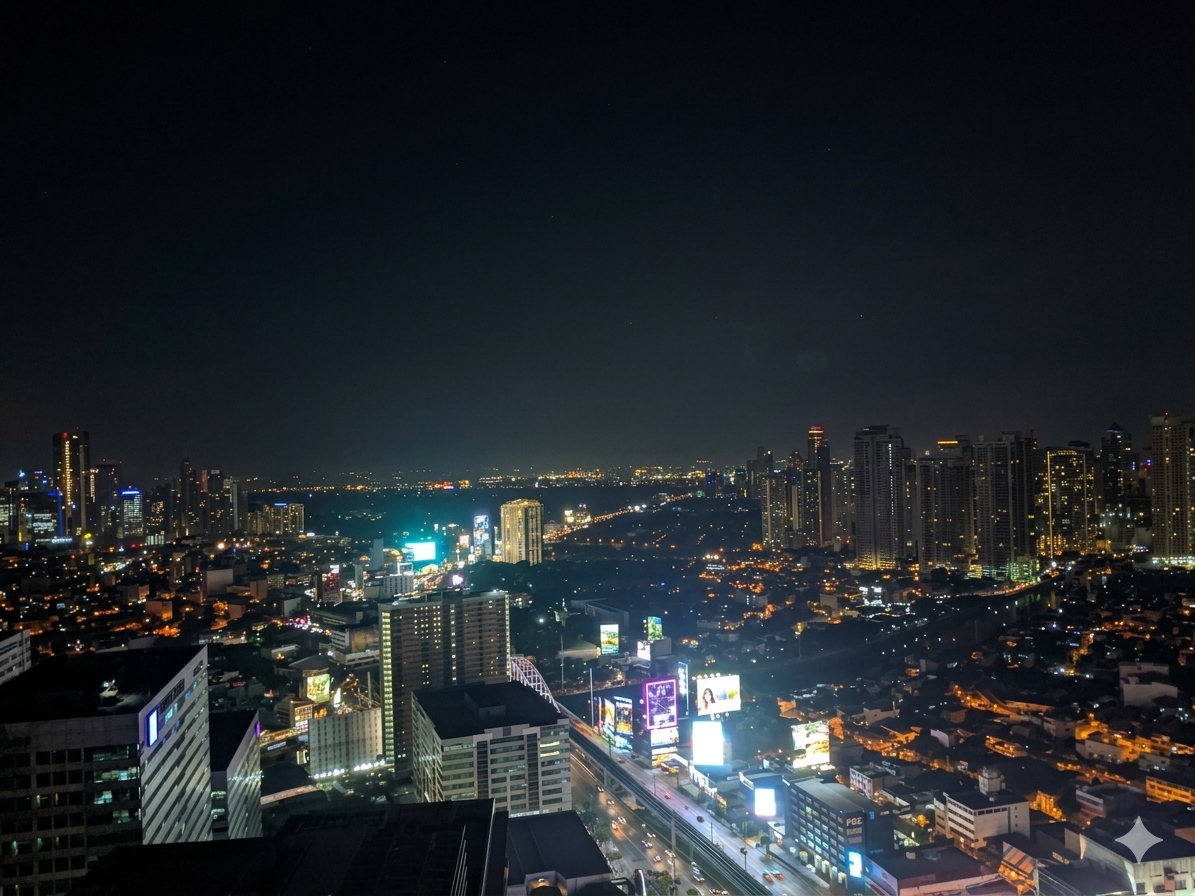
A one-bedroom apartment in central Manila including areas like BGC or Makati costs $430 to $780 per month. Outside those premium areas prices drop significantly, but so does walkability, access to large hospitals, and convenience. The Greenfield District in Mandaluyong where I stayed on my visits sits in the middle of that range and offers good value for the location.
Food costs are similar to Cebu at the local level. Karinderyas, street food, and wet markets are cheap everywhere in the Philippines. What costs more in Manila is the premium lifestyle: the malls, the restaurants, the bars in BGC that charge prices indistinguishable from the Midwest in the U.S.
Transport in Manila deserves its own warning. Grab is reliable and widely used, but Manila traffic is severe enough that the time cost of transport is significant. Factor this into where you choose to live. A cheap apartment an hour from everything by Grab is not actually a bargain.
The Manila budget tiers in 2026:
Comfortable tier is $2,000 to $2,800/month: A decent 1 bedroom in a good neighborhood. Mix of local and restaurant dining. Regular Grab. Health coverage. Manila at this budget is liveable but not lavish.
Comfortable-plus tier — $3,000 to $4,500/month: Modern condo in BGC or Makati. Regular restaurant dining. Some domestic travel. Premium health coverage. Entertainment budget. This is where you stop compromising and start enjoying what Manila actually offers.
Singapore: the reference point
I’m including Singapore not as a retirement destination. It’s actually one of the most expensive cities on earth, but as a reference point for what you’re comparing when you make a Philippines decision.
Average monthly expenses for a single person in Singapore run around S$1,482 excluding rent. A o1 bedroom apartment costs between S$2,000 and S$5,000 per month depending on location. That’s roughly $1,500 to $3,700 USD just for housing.
A single expat in Singapore typically spends about S$4,894 per month all-in which is approximately $3,600 USD. And that’s without children, without a car, and without living in a premium neighborhood.
The comparison matters because many people considering Southeast Asia relocation have Singapore on their list. The Philippines offers roughly the same quality of life infrastructure in Cebu and Manila with reliable internet, good hospitals, English speaking population, modern malls all at 60 to 70 percent less cost. That gap is real and it’s significant.
The hidden costs nobody puts in their budget
Beyond the monthly numbers, there are one time and annual costs that catch new arrivals unprepared:
The setup cost: Moving overseas requires a financial runway before the first month of “normal” expenses begins. First and last month’s rent deposit, furniture if the unit is unfurnished, setting up banking, the initial Grab account loaded and ready, building your grocery routine. Budget $3,000 to $5,000 for the first month beyond your normal monthly costs.
Typhoon season: The Philippines experiences an average of 20 typhoons per year. Most are manageable. Some are not. Power outages last days. Flooding disrupts transportation. If you run a remote business this is a real operational risk worth planning for. A good UPS battery backup and a backup mobile data plan are not optional, they’re infrastructure.
Medical emergencies: This is the big one. A serious health event, a hospitalization, a procedure, an accident can cost $5,000 to $20,000 at a private hospital without insurance. With insurance it becomes manageable. Without it, it can end a relocation permanently.
The flight home: At some point you will need to go back to the US for something. A last minute international flight from Cebu or Manila can cost $1,500 to $2,500. Budget for it annually even if you don’t use it.
Why expats sometimes fail and it’s usually the same reason
I’ve watched people move to the Philippines excited with well intentions and come back within a year. When you dig into the stories, the pattern is almost always the same: they arrived with enough money to cover their monthly costs but not enough to absorb a crisis.
Medical emergency. Family situation back home requiring a flight. Business income that dried up faster than expected. Laptop stolen. Relationship that ended and required renegotiating the entire living situation. Any one of these events, which are not rare, can destabilize a budget that has no margin.
The number that matters isn’t your monthly cost. It’s your emergency reserve. The money you can access in 48 hours without disrupting your income or your living situation. The standard financial advice of three to six months of expenses applies here and it applies more seriously than it does at home, because you’re further from your support network, your country’s social safety net doesn’t apply to you, and the unexpected tends to cost more when you’re navigating it in a foreign country.
The expats I know who have been in the Philippines for five, ten, fifteen years are the ones who stayed and built something real there. They almost universally have this in common: they arrived with more money than they thought they needed. Not because they spent it. Because having it meant they never had to make a desperate decision when something went wrong.
The honest answer to “how much do I need?”
For a single person planning a long term stay in Cebu:
Minimum viable — $1,200/month plus $15,000 emergency reserve. Liveable, not comfortable, and fragile.
Comfortable — $1,800/month plus $20,000 emergency reserve. This is where quality of life genuinely improves and you can absorb most surprises.
Comfortable and sustainable — $2,500/month plus $30,000 emergency reserve. This is where you stop worrying about money and start enjoying the reason you came.
For Manila, add 30 to 40 percent to each of those numbers.
The Philippines is one of the most genuinely rewarding places I’ve ever spent time. The warmth of the people, the beauty of the islands, the cost differential with life in the US, all of it is real. But the people who thrive there long term treat it like any other serious financial commitment: they plan for what they hope won’t happen before they think about what they hope will.
Go. Plan properly. Leave yourself a margin.
You’ll figure out the rest.
This article contains affiliate links.